"Collectors Forum" - All Mosin Nagant are discussed here. Also the Russian and "Finnish capture" SVT38 and SVT40. This is an excellent place for new Mosin owners to ask questions. We have some of the best experts here looking forward to your questions. If you post a Mosin sniper rifle here, we may or may not move it to the sniper forum.
Preservation forum, please no altered military surplus rifles or discussions on altering in this forum. No sportsters. Please read the rules at the top of each forum
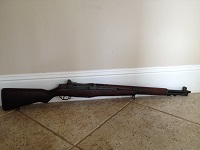
I found an odd ball refurb in my recent travels. I was reluctant to buy it, since the prices on these are so high, but I couldn't pass up such a weird 91/30.
Anyways, the rifle is made in 1942 with NO ARSENAL marks. One would assume it's a standard wartime Izhevsk, but no evidence presents itself. With further investigation, the tang has no stamping on the underside. However, the top side has three odd stamps. The serial number is also a bit odd; it is purely numerical. Weren't the Soviets using alphabetical prefix at this time. Also,the font looks slightly different. The rifle has all matching numbers,along with bayonet. It appears the metal was lightly refurbished.
Last edited by The Feral Machinist on Sat May 07, 2016 10:23 am, edited 1 time in total.
There is one just like this pictured in Alex's new book. I'm not home to look it up though.
On Facebook? Check out the non-sporter preservationist group at: OOOPS. Deleted by Facebook because it's evil to even discuss collectible firearms on social media these days.
In 1942 the enemy was at the gates. Worst time in great patriotic war. The hitlerites forced back plants. Look at receiver and barrel, low shoulders and rough work under stock? Stamps were lost and priority was to get weapon into hands of soldiers. Does it fire? I have 1942 91/30 that is good shooter but very rough in workmanship.
When it comes to wartime Izhevsk Mosins I have seen every combination from no markings to a full double set of clear markings and every shade in between. They had some things going on at the time that made stamping markings a lower priority than it might have been had the neighbors not been raising a ruckus.
Leave it as it is. The ages have been at work on it and man can only mar it.
Don't hit at all if it is honorably possible to avoid hitting; but never hit soft.
Theodore Roosevelt
On Facebook? Check out the non-sporter preservationist group at: OOOPS. Deleted by Facebook because it's evil to even discuss collectible firearms on social media these days.
Maine 20th wrote:In 1942 the enemy was at the gates. Worst time in great patriotic war. The hitlerites forced back plants. Look at receiver and barrel, low shoulders and rough work under stock? Stamps were lost and priority was to get weapon into hands of soldiers. Does it fire? I have 1942 91/30 that is good shooter but very rough in workmanship.
A perfect example of a war-expedient rifle. Very nice!
"Patriotism is supporting your country all the time, and your government when it deserves it". Mark Twain
MarksmanTim wrote:That's a neat one. The machining marks indicate that it's never been scrubbed.
Only question I have is, where are the "proof marks" on the barrel shank? The proof marks have to be on the rifle before being issued and they are there. I see them "under" the machining marks and very light. Would that indicate that the machining marks were put on "after the rifle was marked up"? If so, when was the machining marks put on?
Sure is a interesting rifle (One more to add to the pile of unanswered questions!!). I would have bought it also.
Dolk
Yeah I have seen a few like this one and had the same questions. I also kind of think and wonder out of my head are these more or less modern done refurbs because of their total disrespect for the proof marks? Needless to say I have absolutely nothing to base this on just a wild thought coming I guess basically out of my total dislike and distrust for Molots and such coming out a few years back. Years ago when the first of the refurbs was eyeballed by me they had a great deal of respects for these proofs and today the ones done recently just do not. Draw what ever conclusions you want out of that I guess? As we often say here just my 2 cents! Bill
Interesting rifle. As it was mentioned, similar rifles are described in my book at pages 15-16.
Now facts
1) We have 1941-1942 rifles that are marked atypical (without letter prefix). Majority of them have D in circle\oval marking, which is "tolerance" marking, it mean that part shows deviations from established sizes, but was allowed for use. In majority of cases it is observed together with B and P in oval\circle markings, their meaning is unknown.
2) 1941 factory documents mention so called "allowed" rifle, that were issued with lowered requirments than regular rifles.
It's seems logical to unite fact #1 and #2. But I was not able to find document how these "allowed" rifles were marked, so I can't tell for sure
Now to discussed rifle. Barrel is marked with Izhevsk period correct font. Year was not rolled as usual during production of the barrel, it was stamped manually with serial number. Does it have Y or П in oval markings? Can you post more pictures of proofmarks at the right and the left sides of the barrel?
MarksmanTim wrote:That's a neat one. The machining marks indicate that it's never been scrubbed.
Only question I have is, where are the "proof marks" on the barrel shank? The proof marks have to be on the rifle before being issued and they are there. I see them "under" the machining marks and very light. Would that indicate that the machining marks were put on "after the rifle was marked up"? If so, when was the machining marks put on?
Sure is a interesting rifle (One more to add to the pile of unanswered questions!!). I would have bought it also.
Dolk
I've a feeling the proof marks were just struck so lightly that they didn't make it past the ridges left by the cutter. Probably just stamping as quickly as he/she could in order to get the gun out the door and into the hands of the guys that were trained to save their butts.